

The Remarkable Story of an Irish Monk
By the time of Kilian’s’ birth in c.640 AD the Parish of Mullagh would have been a bustling rural community. Being of noble birth he would have grown up surrounded by a large extended family and servants. Local ecclesiastical centres which would have been founded by local people began to flourish. These were important centres for education, worship and trade. By the early decades of the seventh century Anglo-Saxon nobles and others from all over Europe were coming to study in Irish monastic settlements. The influx of people meant that these places became centres of excellence for literature and art and amassed great wealth.
Little is known about Kilian’s early ecclesiastical education. He possibly received some teaching at some of the early church sites within the locality. However, Rosscarbery, Co. Cork is where Kilian received most of his early religious training, an important centre of learning during this period. He then travelled to Tuosist, Co. Kerry to complete his ecclesiastical studies. Kilian then journeyed to Kerry where he founded his own monastery at Kilmakilloge, Co. Kerry.
By the 7th century, enthusiasm for Christianity was leading Irishmen to devote themselves to monastic life and decided to convert the pagan tribes in Scotland, England and Central Europe. In 686, from a small port in Lauragh, Co Kerry, in the Kilmakilloge Harbour Kilian set sail for Europe, with a group of companions, to spread Christianity to heathens of Europe.
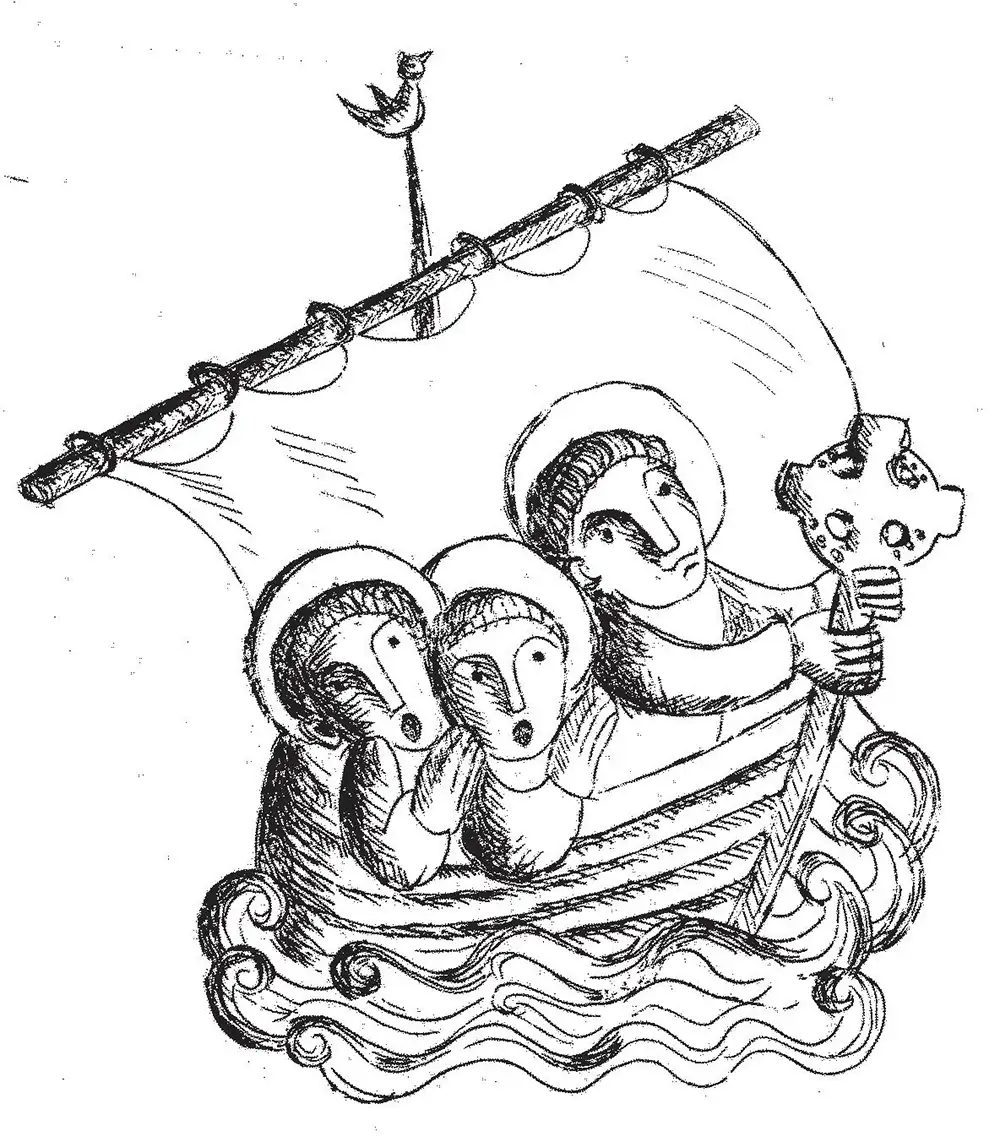
After three days in a hide covered boat, they arrived at Gaul (France). In c.686, Kilian and his companions went to Rome for a papal blessing and approval to do this evangelistic work for the Church. They were received by Pope Canon who gave them permission to preach in the name of God and instructed them to make their way to the Franconia region (Germany). On their way the original group became separated and only Kilian, Kolonat (Colman), a priest, and Totnan, a deacon, arrived in Franconia.
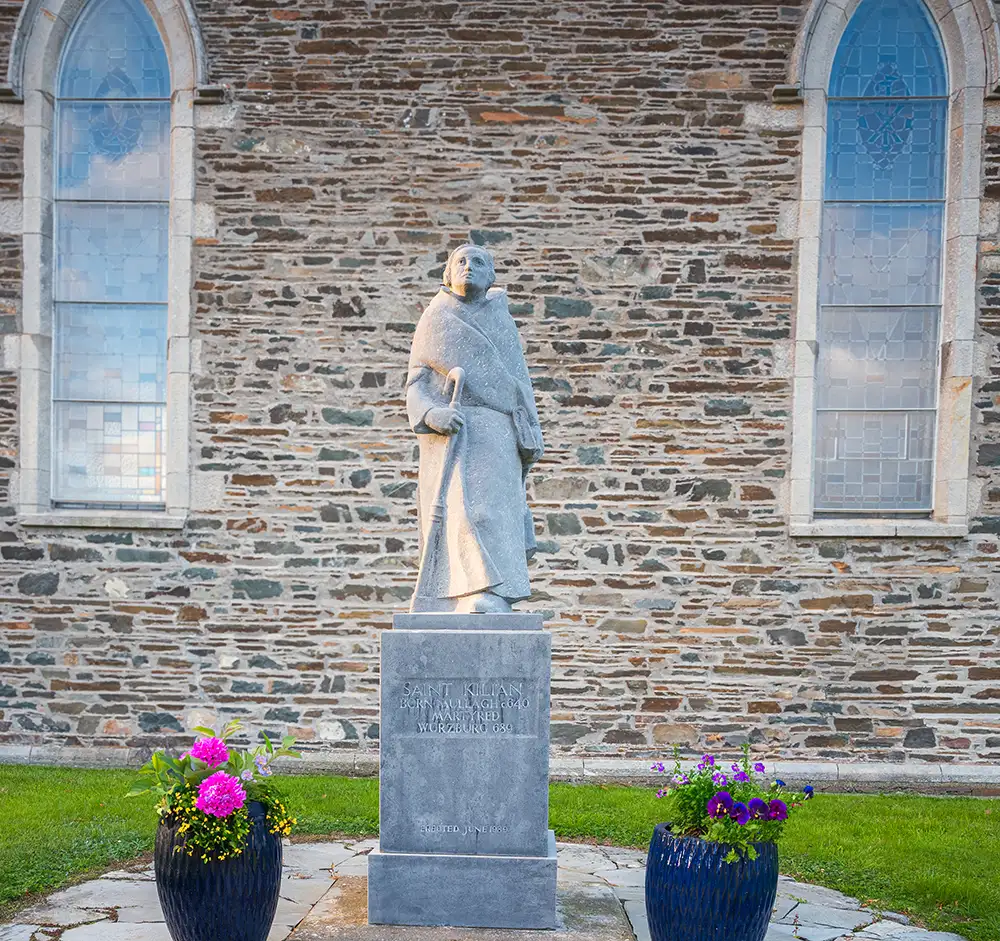
Monks at this time wore leather sandals and simple white tunics made from coarse undyed wool. Over which, they wore a cape and hood over their tonsured heads.
The region was predominately pagan with some small settlements of Christians. At Easter c.688, Kilian baptized the reigning Duke Gozbert, which in turn led to many converting to the new Christian faith. Gosbert was married to his brother’s widow, which at that time was common practice but was against Frankish and Church law. The now Christian Duke, on the advice of Kilian decided to abandon everything and leave his wife Geilana, who had remained pagan, once he had returned from a planned crusade.
When Duchess Geilana heard about the Gosberts intentions, she became resentful towards Kilian and his companions. She planned the killing of Kilian, Totnan and Kolonat. They were beheaded and secretly buried along with their priestly garments, Vessels, Cross and Bible in the stables belonging to the Duke. When Gosbert returned from the crusade in c.689, he inquired as to the whereabouts of the noble servants of God. His wife replied that she did not know. Legend states that Geilana and those responsible for carrying out the deaths of the missionaries were so traumatised by guilt that they all took their own lives.
When St. Boniface established the see of Würzburg in c.742, he set out to locate the bodies of Kilian, Totnan and Kolonat. St Burchard, the first Bishop of Würzburg, asked the people to pray and to fast in order that the search might end in success. Legend states that the horses in the stables would paw at the ground in a particular place. The area was examined and excavated and on July 8th 752, their remains were found in a shallow grave along with their garments and books. A local blind philosopher visited the relics and was miraculously cured of blindness. Bishop Burchard wrapped the three skull relics in a silken cloth and transferred them to a vault. His successor interred the relics in the first Cathedral in Würzburg and they were consecrated in October 788 by Bishop Berowelf in the presence of Charlemagne (King of the Francs).
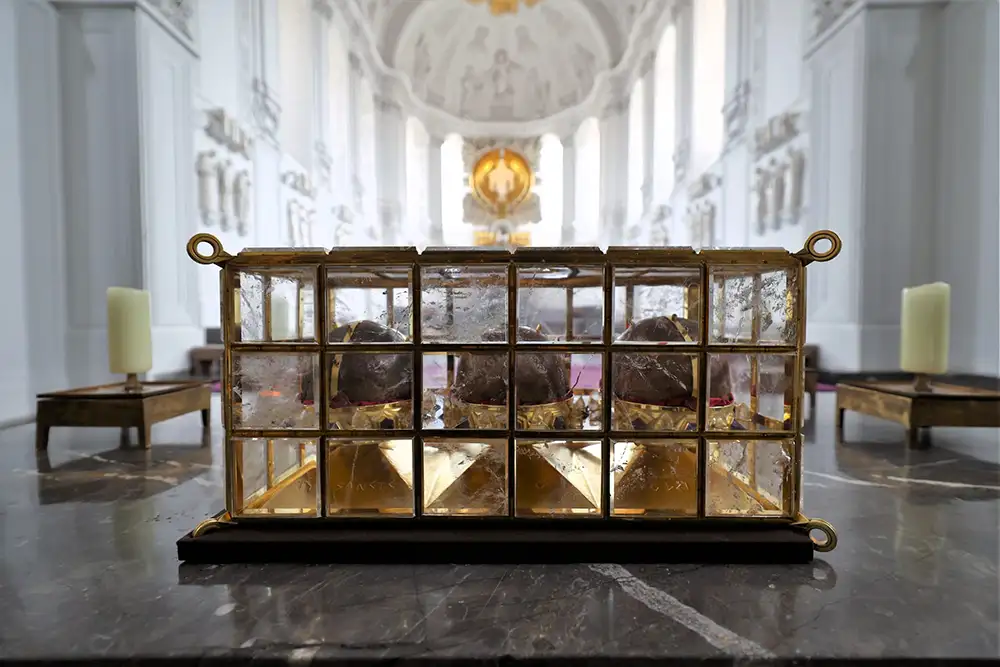
Image courtesy of Fr Paul Prior
When St. Boniface established the see of Würzburg in c.742, he set out to locate the bodies of Kilian, Totnan and Kolonat. St Burchard, the first Bishop of Würzburg, asked the people to pray and to fast in order that the search might end in success. Legend states that the horses in the stables would paw at the ground in a particular place. The area was examined and excavated and on July 8th 752, their remains were found in a shallow grave along with their garments and books. A local blind philosopher visited the relics and was miraculously cured of blindness. Bishop Burchard wrapped the three skull relics in a silken cloth and transferred them to a vault. His successor interred the relics in the first Cathedral in Würzburg and they were consecrated in October 788 by Bishop Berowelf in the presence of Charlemagne (King of the Francs).